
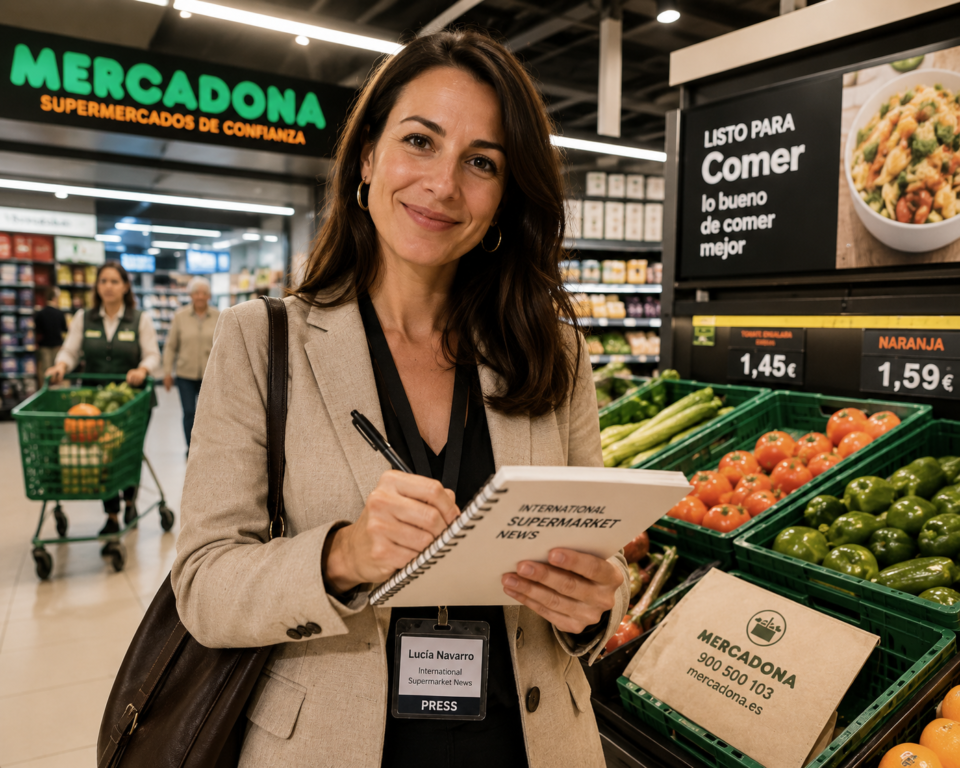
By Lucía Navarro for International Supermarket News
There is something uniquely Spanish about the Mercadona experience. It is not loud luxury or theatrical retail design. It is efficiency, familiarity and rhythm. Millions of shoppers across Spain walk into Mercadona every week knowing almost exactly what they will find: clean aisles, dependable prices, fast checkouts and products that feel built for everyday life rather than marketing campaigns.
That consistency has become one of the company’s greatest strengths.
Led by billionaire chairman Juan Roig, Mercadona has quietly built one of Europe’s most disciplined retail operations. While many supermarket chains chased aggressive international expansion and flashy reinventions, Mercadona focused on refining the basics. The company concentrated heavily on Spain and Portugal, investing in logistics, store layouts and private-label products with near-industrial precision.
The result is a supermarket system that feels carefully engineered around convenience.
For many Spanish consumers, shopping at Mercadona is less stressful than visiting rival chains. Stores are designed for speed and familiarity. Product ranges are selective rather than overwhelming. Shoppers are not confronted with endless versions of the same item. Instead, Mercadona offers a curated selection built around practicality and value.
Its private-label brands have become central to that experience. Hacendado, Deliplus and Bosque Verde are no longer viewed as budget alternatives but as trusted household names. Many customers actively prefer them over international brands, believing they offer strong quality at lower prices.
Fresh food sections have also become increasingly important to the company’s identity. Mercadona has modernised many stores with improved bakery areas, ready-to-eat meals and more efficient produce displays designed to fit changing consumer habits. The atmosphere is functional but polished, aimed at making everyday shopping feel smooth rather than exhausting.
That matters during a time when European consumers are under growing financial pressure. Inflation has turned supermarket shopping into a more calculated experience for millions of households. Across Europe, shoppers are hunting for bargains and reducing impulse spending. Mercadona has benefited from this shift because it built its reputation around consistency and value long before the inflation crisis intensified.
Part of the company’s success also comes from operational discipline behind the scenes. Mercadona has spent years refining distribution networks, inventory management and supplier relationships to reduce inefficiency. Industry analysts often compare the company’s logistics systems to manufacturing operations because of their precision and speed.
The chain’s focus on efficiency has not eliminated criticism. Labour practices, supplier pressure and sustainability concerns have all attracted scrutiny at various points. Yet customer loyalty remains remarkably strong, especially in Spain where Mercadona has become deeply woven into daily life.
For many shoppers, the appeal is simple. Mercadona removes friction from ordinary shopping. In a retail world increasingly filled with noise, promotions and complexity, that simplicity has become surprisingly powerful.
And across Europe’s increasingly competitive supermarket industry, rivals are paying close attention.