
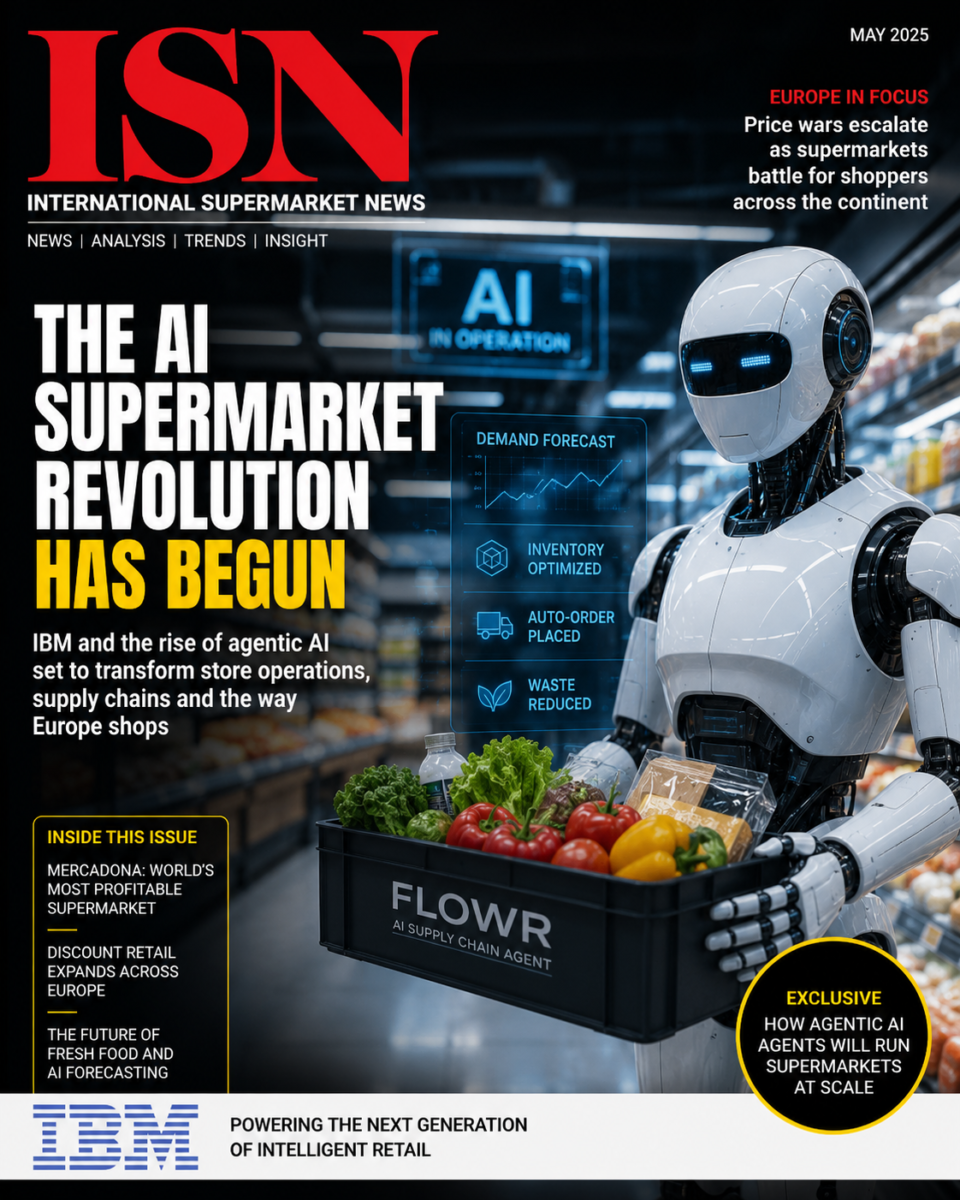
The supermarket industry is entering a new technological arms race as retailers explore “agentic AI” systems capable of running large parts of store operations with minimal human involvement. Companies across Europe and the United States are investing heavily in artificial intelligence that can predict demand, manage inventory, automate supply chains and even make operational decisions in real time.
At the centre of the shift is a growing belief that traditional supermarket management is no longer fast enough for modern retail.
Consumers are changing shopping habits rapidly, inflation continues to pressure margins and competition between supermarkets has become increasingly brutal. Retailers now need systems capable of reacting instantly to changing demand, pricing wars and supply disruptions. That is where agentic AI enters the picture.
Unlike conventional AI tools that simply analyse information or respond to commands, agentic AI is designed to act autonomously. These systems can monitor conditions, make decisions, trigger actions and continuously adjust strategies without waiting for human instructions.
In supermarkets, that could transform almost every part of the business.
A network of AI agents could monitor shelf inventory in real time, predict product shortages before they happen and automatically place orders with suppliers. Another AI system could track weather forecasts, local events and shopping patterns to predict demand surges for specific items. If temperatures suddenly rise in southern Europe, the system could immediately increase orders for bottled water, ice cream and cold drinks before shelves begin emptying.
Fresh food management may become one of the biggest battlegrounds. Supermarkets lose enormous amounts of money every year through food waste, particularly in fruit, vegetables, meat and bakery products. Agentic AI systems are being designed to forecast sales with far greater precision, adjusting orders dynamically throughout the day to reduce waste while keeping shelves stocked.
Retailers are also exploring AI-driven pricing systems capable of responding instantly to market conditions. Products approaching expiration could automatically receive deeper discounts, while pricing algorithms monitor competitors and adjust promotions in real time.
Technology giants including IBM are positioning themselves at the centre of this transformation. IBM has been investing heavily in enterprise AI systems, supply-chain automation and retail analytics tools designed to help companies process massive amounts of operational data faster and more efficiently.
The company has increasingly focused on AI agents capable of automating workflows across logistics, forecasting and inventory management. Retail analysts believe firms like IBM are attempting to build the digital infrastructure that could eventually power autonomous supermarket operations at scale.
Projects such as “Flowr” are pushing these ideas further by experimenting with interconnected AI agents that cooperate across entire supply chains. Instead of relying on one central program, multiple specialised AI systems work together, handling everything from warehouse coordination to delivery scheduling and in-store stock optimisation.
The appeal for supermarkets is obvious. Grocery retail operates on extremely thin profit margins, meaning even small improvements in efficiency can generate massive financial gains. Faster inventory management, lower food waste and smarter pricing strategies could save retailers millions of euros annually.
But the rise of agentic AI is also raising concerns.
Critics warn that supermarkets may become overly dependent on automated systems making decisions humans no longer fully understand. Labour groups fear widespread automation could reduce management and operational jobs inside stores and warehouses. Privacy advocates are also watching closely as retailers increasingly rely on customer data and predictive behaviour analysis.
Even so, the direction of travel appears clear. Europe’s supermarket price wars are intensifying, shoppers are becoming more price-sensitive and retailers are under pressure to operate faster and leaner than ever before.
In that environment, supermarkets are no longer just competing over groceries. They are competing over algorithms, automation and artificial intelligence.
And companies like IBM are betting that the supermarket of the future may not simply be managed by humans with AI assistance — but increasingly by AI itself.