
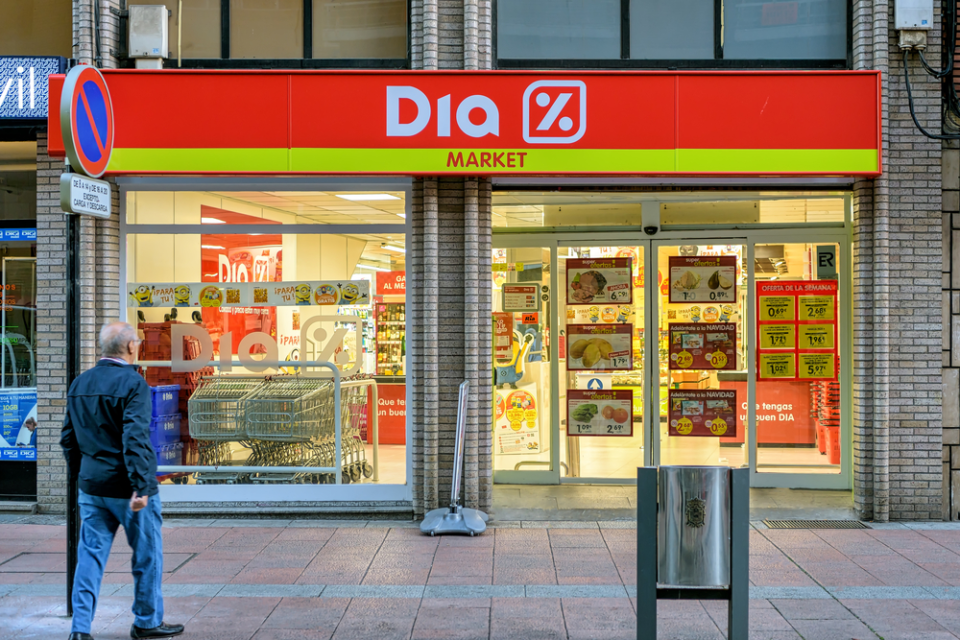
DIA remains one of Spain’s most recognizable discount supermarket chains in 2026, but its recent history has been marked by restructuring, operational changes, and a continuous effort to regain stability in a highly competitive market. The company operates in a sector dominated by price sensitivity, where efficiency and cost control are essential for survival.
In recent years, DIA has shifted its strategy toward simplification. After periods of financial and operational difficulty, the company has focused on streamlining its store network, improving supply chain efficiency, and strengthening its core discount identity. This approach is aimed at returning DIA to its roots as a lean, price-focused retailer that prioritizes affordability and accessibility.
A key part of this transformation has been the reorganisation of its store portfolio. DIA operates a large number of small neighbourhood supermarkets and franchise-based stores, which allow it to maintain a strong local presence. However, not all locations have performed equally well. The company has been closing underperforming stores while investing in more profitable areas, particularly in urban and high-density regions where demand remains strong.
Franchise partnerships play an important role in DIA’s business model. Many of its stores are operated by independent franchisees, which helps reduce operational costs and expand reach without heavy capital investment. However, managing consistency across a large franchise network can be challenging. DIA has been working to improve coordination, supply reliability, and pricing alignment to ensure a more uniform customer experience across its stores.
Private-label products are central to DIA’s strategy. As a discount retailer, the company relies heavily on its own-brand goods to maintain competitive pricing and protect margins. In 2026, DIA continues to expand and refine its private-label range, focusing on everyday essentials and high-turnover items. These products are designed to offer value without sacrificing basic quality expectations, which is critical in a price-sensitive market like Spain.
Price competition in Spain remains intense. Consumers are highly aware of food costs, and discount chains play a significant role in the grocery sector. DIA competes directly with both domestic retailers and international discounters such as Lidl and Aldi. To remain competitive, DIA must continuously balance low pricing with operational efficiency, ensuring that cost savings are passed on to customers without undermining profitability.
Supply chain efficiency is another major focus area. DIA has been working to simplify its logistics operations, reduce distribution costs, and improve stock availability. In the past, inefficiencies in the supply chain contributed to operational difficulties, so improving this area has become a strategic priority. Better coordination between suppliers, warehouses, and stores is essential for maintaining low prices and consistent product availability.
Digital transformation is gradually becoming more important for DIA, although it is not the company’s primary focus. Online grocery shopping is growing in Spain, but DIA’s strategy has been cautious. The company has developed online ordering and delivery services in selected areas, but it prioritizes profitability and operational control over rapid digital expansion. This reflects its broader strategy of maintaining simplicity and avoiding unnecessary complexity.
Customer behaviour in Spain continues to evolve, with shoppers increasingly looking for convenience as well as low prices. DIA’s small-store format is well suited to this trend, as it allows customers to make frequent, quick purchases close to home. However, competition in urban convenience retail is strong, and DIA must ensure that its stores remain attractive in terms of pricing, product availability, and speed of service.
Sustainability is becoming more important across the retail sector, and DIA is gradually introducing measures to reduce environmental impact. These include efforts to reduce packaging waste, improve energy efficiency in stores, and optimize transport logistics. While sustainability is not the company’s primary selling point, it is becoming an increasingly important part of regulatory and consumer expectations.
Labour and workforce management also play a role in DIA’s restructuring efforts. With a large network of stores, including many franchise-operated locations, maintaining consistent training and service quality is a challenge. The company has been working to improve operational standards across its network while keeping labour costs aligned with its discount model.
Despite its challenges, DIA still holds a strong position in Spain’s discount grocery segment. Its local store presence and focus on affordability give it relevance in a market where price sensitivity remains high. However, the company’s long-term success depends on its ability to maintain efficiency while rebuilding trust and consistency across its operations.
Looking ahead, DIA is expected to continue focusing on simplification and operational discipline. Rather than pursuing rapid expansion, the company is likely to prioritise profitability, store performance, and supply chain stability. Strengthening its core discount model remains central to its strategy.
In a competitive and cost-driven retail environment, DIA’s future will depend on how effectively it can balance low prices with operational reliability. Its focus on local convenience, private-label strength, and efficiency provides a foundation, but continued restructuring and adaptation will be necessary to secure long-term stability in the Spanish supermarket sector.