

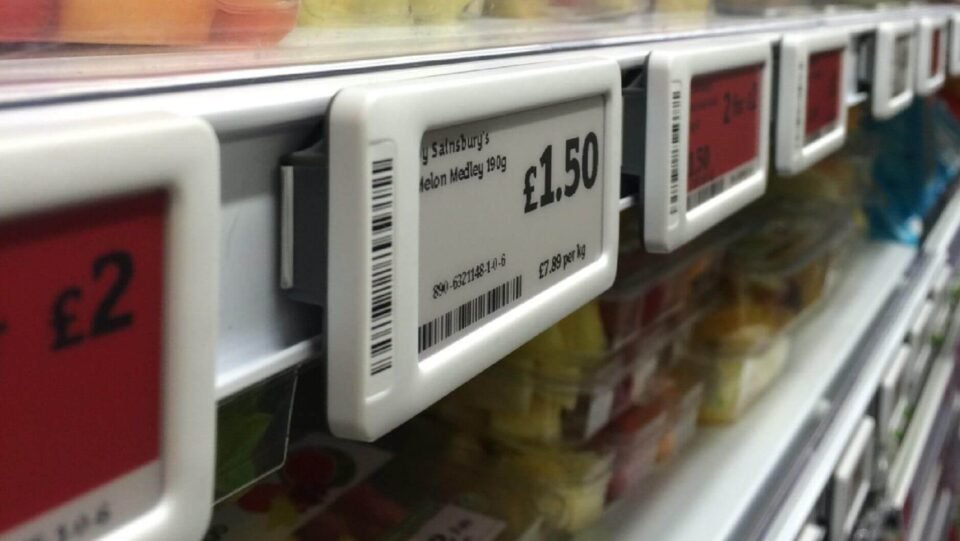

The electronic shelf label (ESL) sector has been present in the retail industry for more than a decade, yet for many years it remained a niche technology—promising, visible in pilot stores, but far from universal. Today, that phase is ending. What was once considered an innovation is becoming a standard, and the market is now entering a period of accelerated growth driven by structural changes in retail. The shift is not sudden; it is the result of years of slow maturation now reaching a tipping point.
The global ESL market illustrates this trajectory clearly. Around 2025, the sector was valued at roughly $2 billion, with forecasts projecting growth to over $7 billion within the next decade, supported by double-digit annual growth rates. This is not explosive overnight expansion, but rather sustained, compounding growth. It reflects a technology that has moved from experimentation to industrial-scale deployment.
In its early years, ESL technology faced multiple barriers. High installation costs, integration challenges with legacy retail systems, and limited awareness among retailers slowed adoption. Many supermarket chains questioned the return on investment, particularly in a sector where margins are thin and capital expenditure is carefully controlled. Even when deployed, ESLs were often limited to pilot stores or specific categories.
The situation today is fundamentally different. Retail is undergoing a structural transformation driven by automation, data integration and the need for real-time responsiveness. ESL technology fits precisely into this new environment. It enables centralised pricing, reduces manual labour, improves accuracy and supports dynamic pricing strategies. These are no longer optional improvements; they are becoming essential tools in a highly competitive and margin-sensitive industry.
Supermarkets and hypermarkets are leading this transition. They account for the majority of ESL deployments globally, driven by the complexity of managing thousands of products across multiple locations. In large-format stores, manual price updates are not only inefficient but also prone to errors that can result in compliance issues and customer dissatisfaction. ESL systems eliminate this risk by synchronising pricing across all shelves instantly.
The economic logic behind ESL adoption is increasingly clear. While the initial investment remains significant, the long-term savings are substantial. Labour costs are reduced, pricing errors are minimised, and promotional campaigns can be executed with greater speed and precision. Retailers report improvements in operational efficiency of up to 30% and pricing accuracy exceeding 95%, reinforcing the business case for adoption.
However, the transition is not purely about cost savings. It is also about control. In a retail environment characterised by fluctuating demand, competitive pricing pressure and rising costs, the ability to adjust prices in real time is a strategic advantage. ESL systems enable retailers to respond immediately to market conditions, whether that means matching competitors, managing stock levels or optimising margins.
This capability introduces a new dimension to retail pricing: dynamic pricing. While widely used in sectors such as airlines and hospitality, its application in supermarkets is still evolving. ESL technology makes it technically possible to adjust prices multiple times per day, based on demand, time of day or inventory levels. This has sparked debate among consumers and regulators, as it raises questions about transparency and fairness. Nonetheless, from a retailer’s perspective, it represents a powerful tool for revenue optimisation.
The pace of implementation is now accelerating. Major supermarket chains across Europe and North America are moving beyond pilot projects to full-scale rollouts. Some are deploying millions of labels across hundreds of stores, signalling a shift from experimentation to standardisation. This trend is not limited to one region; it is global, with Europe currently leading in deployment and Asia-Pacific emerging as the fastest-growing market.
Despite this progress, adoption is not yet universal. A significant proportion of retailers, particularly small and medium-sized operators, have not yet implemented ESL systems. Cost remains a key barrier, as does the complexity of integrating the technology with existing point-of-sale and inventory systems. Approximately 40% of retailers still cite installation costs as a major obstacle, while others highlight technical challenges.
This creates a two-speed market. Large retail chains with the resources to invest are moving rapidly towards full digitalisation, while smaller players are adopting a more cautious approach. Over time, however, this gap is likely to narrow as costs decrease and technology becomes more accessible.
Another important factor driving growth is the evolution of the technology itself. Early ESL systems were relatively basic, displaying only price information. Today’s systems are far more sophisticated. They can display promotional messages, QR codes, product information and even integrate with mobile applications. Advances in e-paper technology have improved readability, reduced energy consumption and extended battery life to several years.
Communication technologies have also evolved. Modern ESL systems use radio frequency, Bluetooth and other wireless technologies to connect with central management systems. This allows for seamless integration with broader retail infrastructure, including inventory management, analytics and customer engagement platforms. The result is a more connected and intelligent store environment.
The role of ESLs within the broader context of retail digitalisation cannot be overstated. They are not an isolated technology but part of a wider ecosystem that includes automation, artificial intelligence and data analytics. Together, these technologies are transforming the way retailers operate, enabling more efficient, responsive and customer-centric business models.
From a market perspective, the growth trajectory is expected to remain strong. Forecasts consistently indicate double-digit growth rates over the coming decade, driven by continued adoption in supermarkets, expansion into other retail sectors and ongoing technological innovation.
One of the key drivers of future growth will be the integration of ESLs with omnichannel retail strategies. As the distinction between online and offline retail continues to blur, maintaining consistent pricing across all channels becomes increasingly important. ESL systems allow retailers to synchronise in-store prices with online platforms in real time, ensuring a seamless customer experience.
There is also growing interest in using ESLs for purposes beyond pricing. Retailers are exploring their potential for inventory management, shelf monitoring and customer interaction. For example, ESLs can be linked to systems that track stock levels and trigger automatic reordering. They can also be used to display personalised offers or guide customers to specific products within the store.
However, the expansion of ESL technology is not without challenges. In addition to cost and integration issues, there are concerns about consumer perception. The concept of dynamic pricing, in particular, has generated debate. Some consumers fear that prices could increase during periods of high demand, leading to a perception of unfairness. Retailers will need to manage these concerns carefully, balancing the benefits of flexibility with the need for transparency and trust.
There are also operational challenges. Implementing ESL systems at scale requires careful planning, coordination and investment. It involves not only the installation of physical labels but also the integration of software, training of staff and adaptation of existing processes. For large retailers with thousands of stores, this is a complex and resource-intensive undertaking.
Looking ahead, the ESL market is likely to continue its transition from growth to maturity. As adoption increases, the focus will shift from installation to optimisation. Retailers will seek to maximise the value of their investment by integrating ESLs more deeply into their operations and exploring new use cases.
At the same time, competition among technology providers is expected to intensify. As the market grows, new players are entering the space, and existing players are expanding their capabilities. This competition is likely to drive innovation, reduce costs and accelerate adoption further.
In conclusion, the evolution of electronic shelf labels over the past decade reflects a broader transformation within the retail industry. What began as a niche technology has become a critical component of modern retail infrastructure. The initial slow pace of adoption was not a failure but a necessary phase of development, during which the technology matured and the business case became clearer.
Today, the conditions are in place for accelerated growth. Retailers face increasing pressure to improve efficiency, reduce costs and respond quickly to changing market conditions. ESL technology addresses these challenges directly, making it not only relevant but essential.
The trajectory is clear. ESLs are moving from optional innovation to industry standard. The question is no longer whether retailers will adopt this technology, but how quickly they can implement it and how effectively they can use it to gain a competitive advantage.