
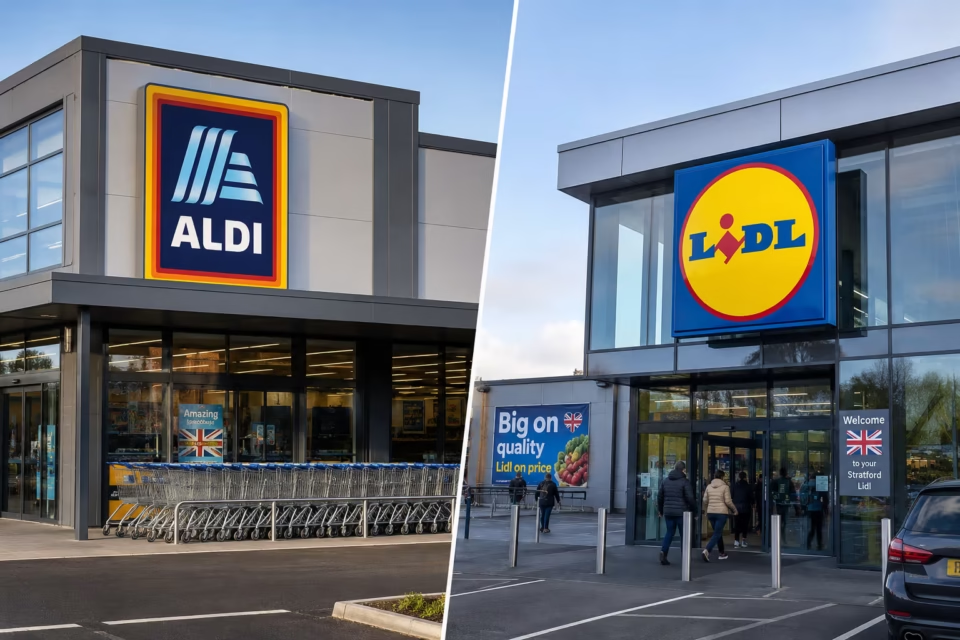
Across Europe, discount supermarkets like Aldi and Lidl have built a powerful reputation for one thing above all else: consistently low prices. What looks simple on the surface is actually a tightly engineered system built to strip out unnecessary costs at every level of the business.
The foundation of their pricing strategy is overhead reduction. Traditional supermarkets spend heavily on store design, branding, large staffing teams, and customer experience features that add comfort but also increase costs. In contrast, discount retailers run lean operations. Stores are basic, layouts are standardized, and staffing levels are deliberately minimal. The idea is simple: if a cost does not directly support low prices, it is removed or reduced.
One of the clearest examples is checkout design. In many conventional supermarkets, multiple tills operate at once, creating a smoother customer flow but requiring more staff. In discount stores, it is common to see only one or two tills open at a time. Customers may queue longer, but many accept this trade-off because the savings are visible at the shelf. For a large number of shoppers, waiting a few extra minutes is worth it if their weekly bill is lower.
Another major factor is the focus on fast-moving goods. These supermarkets concentrate on high-volume essentials—items that sell quickly and repeatedly, such as bread, milk, pasta, and basic household products. By limiting slow-moving stock, they reduce waste, storage costs, and inventory risk. This approach ensures that shelves turn over rapidly, keeping cash flow strong and reducing the chance of unsold products driving up prices.
Behind the scenes, supply chains are designed with the same philosophy. Instead of relying on complex, multi-layered distribution systems, discount retailers streamline logistics to move goods efficiently from producer to store. Bulk purchasing, long-term supplier contracts, and centralized distribution centers help stabilize costs even when global food prices fluctuate. Every step is optimized to remove friction and reduce expense.
In practice, this system reshapes customer expectations. Shoppers do not expect luxury or variety—they expect value. They are willing to queue at a single till, accept simpler store environments, and choose from a smaller selection of products because the trade-off is clear: lower prices on everyday essentials.
What has emerged is not just a retail model, but a philosophy of efficiency. By cutting overheads, focusing on fast-moving goods, and building disciplined supply chains, Europe’s discount supermarkets have turned simplicity into a competitive advantage—and in doing so, changed the way millions of people think about grocery shopping.