
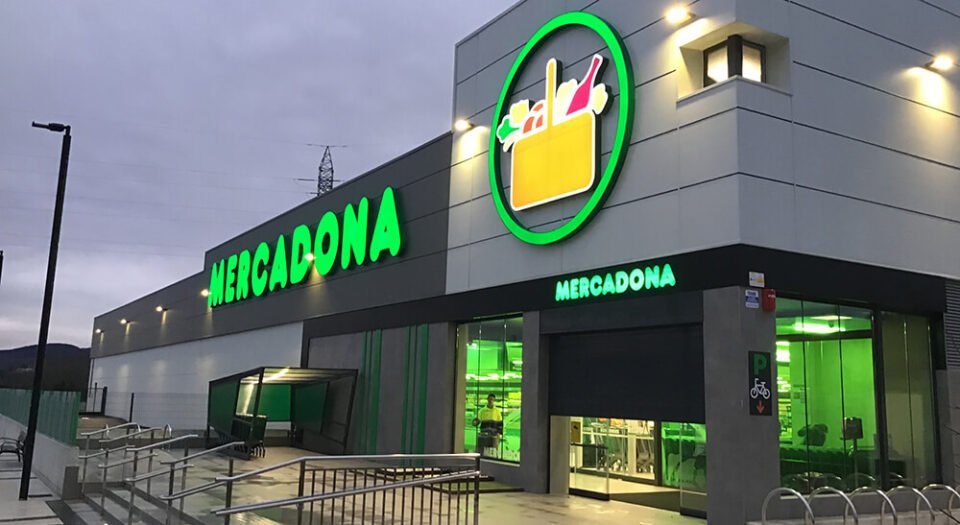
Mercadona has quietly become one of the biggest success stories in global retail. The Spanish supermarket chain, once seen as a regional player focused mainly on Iberia, is now being recognised as the world’s most profitable supermarket group after posting nearly €41.9 billion in turnover and record earnings across Spain and Portugal.
The company’s rise comes at a time when many supermarket giants are struggling with inflation, shrinking margins and changing consumer habits. While retailers across Europe and the United States have battled rising costs and weaker spending, Mercadona has continued to grow by focusing on efficiency, private-label products and disciplined expansion.
Unlike chains that rushed into dozens of international markets, Mercadona stayed heavily concentrated in Spain while slowly building its presence in Portugal. That strategy allowed the company to perfect its operations instead of spreading resources too thin. The result is a supermarket business running with margins far above most competitors in the global grocery industry.
Retail analysts say Mercadona’s strength comes from its ability to simplify the shopping experience. Stores carry fewer product variations than rivals, but the products it does offer are tightly controlled for pricing and quality. Its own brands, including Hacendado and Deliplus, have become dominant names in Spanish households and are now central to the company’s profitability.
Private-label products are a major reason Mercadona continues to outperform larger international competitors. By reducing dependence on external brands, the supermarket chain has more control over pricing, supply chains and inventory management. That has become increasingly important during years of economic pressure and supply disruption.
The company has also spent heavily on logistics and store redesigns. Its newer supermarket layouts are designed around speed, efficiency and lower operating costs. Fresh food sections have been modernised, distribution networks streamlined and energy consumption reduced across many locations. Industry observers say Mercadona now operates with a level of precision more commonly associated with technology companies than traditional supermarkets.
What makes the company’s performance stand out even more is that it has expanded while increasing spending on staff. Mercadona distributed major bonuses to employees and raised salaries during the past year, even as many retailers attempted to cut labour costs. The company also added thousands of new jobs across Spain and Portugal as demand continued to grow.
The supermarket giant’s success is increasingly being viewed as a sign of how consumer behaviour is changing across Europe. Shoppers dealing with years of inflation are moving away from premium supermarket experiences and focusing more on value, consistency and trusted store brands. Mercadona positioned itself for that shift long before many rivals recognised it.
Still, the company is not free from criticism. Animal welfare organisations recently accused Mercadona of failing to fully meet commitments related to cage-free egg sourcing, while labour groups and privacy advocates have raised concerns over past company practices. Despite those controversies, consumer demand remains strong and the chain continues to expand its dominance across Iberia.
Mercadona’s rise is sending a clear message through the global grocery industry. Scale alone is no longer enough to guarantee success. In an era defined by tighter spending and changing shopping habits, efficiency and operational discipline are becoming more valuable than sheer size.
For supermarket giants across Europe and the United States, that may be the most unsettling part of Mercadona’s success story.