
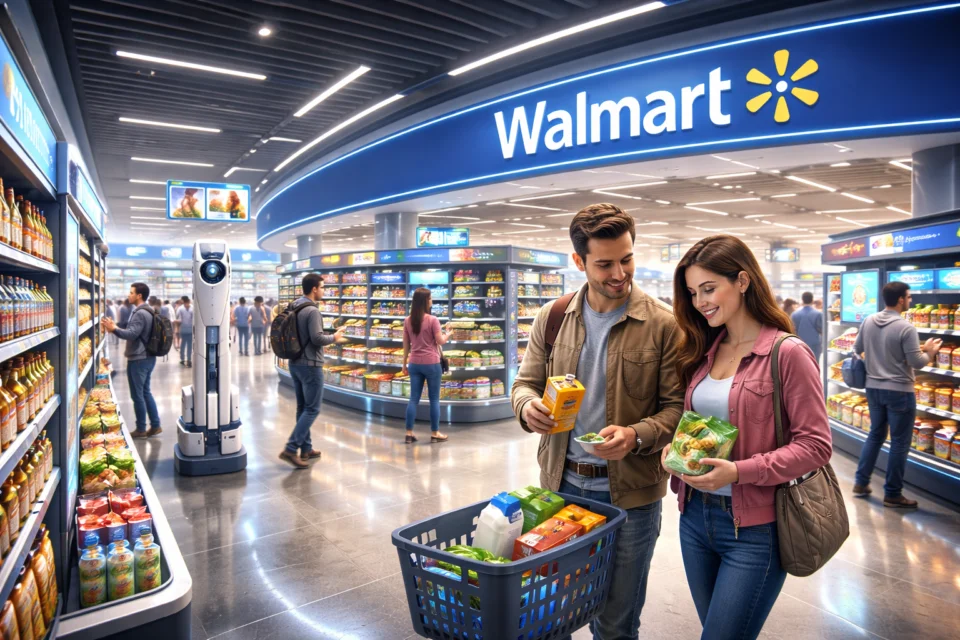
Major global supermarket retailers are entering a new phase of transformation as artificial intelligence, automation, and data-driven logistics become central to grocery operations and customer experience strategies.
Leading chains including Tesco in the UK, Carrefour in Europe, and Walmart in the United States are significantly increasing investment in AI-powered forecasting, automated warehouse systems, and personalised digital shopping platforms. The shift reflects a broader industry push to improve efficiency, reduce operational costs, and respond more precisely to rapidly changing consumer demand patterns.
Retailers are increasingly using artificial intelligence to optimise stock levels across thousands of products, reducing waste while improving availability of high-demand items. Advanced predictive analytics are also being deployed to better anticipate seasonal trends, local shopping behaviour, and supply chain disruptions.
In logistics and fulfilment, automation is becoming a key competitive factor. Large distribution centres are being upgraded with robotics systems capable of picking, packing, and sorting goods at high speed. These systems are designed to support the continued growth of online grocery shopping, which has become a permanent feature of the post-pandemic retail landscape.
Customer-facing technology is also evolving quickly. Supermarkets are investing in personalised digital platforms that recommend products based on shopping history, dietary preferences, and real-time pricing. Mobile apps and loyalty schemes are being integrated into unified ecosystems that combine online and in-store experiences.
Industry analysts suggest that these developments mark a structural shift in how supermarkets operate. Rather than competing solely on price and location, retailers are increasingly competing on technology capability, efficiency, and customer data intelligence.
However, the transition also raises challenges, particularly around investment costs, workforce adaptation, and data privacy. Smaller retailers may struggle to keep pace with the scale of technological investment required, potentially widening the gap between major supermarket groups and regional operators.
Despite these challenges, the direction of travel is clear: supermarkets are no longer just food retailers, but increasingly data-driven technology companies operating within the food supply chain.
