
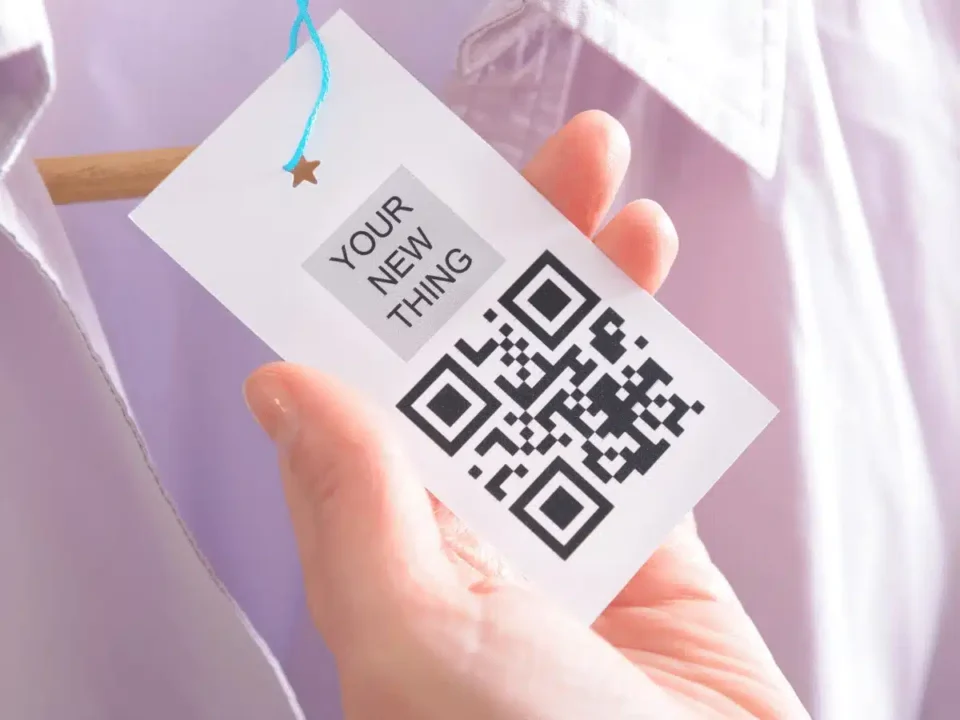
For more than half a century, the humble barcode has been at the heart of global retail. From supermarket checkouts to warehouse logistics, those simple black-and-white lines have quietly powered the modern consumer economy. But a major shift is now underway. Across the world, retailers are beginning to explore a new standard: the QR code.
While barcodes are not disappearing overnight, the retail industry is steadily moving toward a smarter, more data-rich system that could eventually see QR codes become the dominant technology on product packaging.
🧾 The limits of the barcode system
The traditional barcode (UPC or EAN) was designed in the 1970s with one simple purpose: to identify a product at the point of sale.
It does that job extremely well—but it has one major limitation:
A barcode only stores a single piece of information: a product identifier.
That identifier links to a database in the retailer’s system, but the barcode itself carries no additional details. It cannot tell you anything about ingredients, expiry dates, sustainability, or product origin without external systems.
In today’s digital world, where consumers expect instant access to information, this is increasingly seen as outdated.
📱 Why QR codes are changing everything
QR codes (Quick Response codes) were originally invented in Japan for tracking automotive parts, but their potential has grown far beyond industrial use.
Unlike barcodes, QR codes can store far more data and can also link directly to online content.
A single QR code can contain:
- Product identification
- Ingredients and allergens
- Nutritional values
- Batch and expiry information
- Recycling instructions
- Brand websites and videos
- Promotions or loyalty rewards
This makes them far more flexible and powerful than traditional barcodes.
🛒 Why retailers are interested
From a retailer’s perspective, QR codes offer several major advantages.
1. Smarter inventory and supply chains
QR codes allow more detailed tracking of products throughout the entire supply chain. This improves:
- stock management
- recall accuracy
- freshness monitoring
- logistics efficiency
If a problem occurs, retailers can identify affected products much faster and more precisely.
2. Reduced packaging clutter
Today, packaging often needs to include a large amount of printed information: ingredients, legal details, recycling instructions, and more.
With QR codes:
- much of this information can be moved online
- packaging can become cleaner and more sustainable
- updates can be made digitally without redesigning packaging
3. Cost efficiency over time
While QR codes do not eliminate packaging costs, they reduce the need for:
- repeated redesigns for legal updates
- multiple regional packaging versions
- printed promotional materials
Retailers can update product information instantly in databases instead of physically changing packaging.
🛍️ Why shoppers benefit too
The biggest change may actually be on the consumer side.
QR codes transform packaging into an interactive information hub.
1. Full product transparency
Shoppers can instantly access:
- where food was produced
- how it was sourced
- whether it is sustainable or ethical
- full ingredient breakdowns
This level of transparency is not possible with barcodes alone.
2. Health and dietary benefits
For people with allergies or dietary restrictions, QR codes can provide:
- real-time allergen warnings
- personalised dietary filters
- detailed nutritional breakdowns
This makes shopping safer and more personalised.
3. Interactive shopping experience
QR codes can link to:
- cooking recipes
- product tutorials
- customer reviews
- brand storytelling
Instead of static packaging, products become interactive experiences.
4. Better recycling and sustainability info
Consumers can scan a product and immediately see:
- how to recycle packaging correctly
- environmental impact data
- sustainability certifications
This supports more environmentally conscious shopping decisions.
⚖️ Why barcodes are not disappearing immediately
Despite the advantages of QR codes, barcodes still dominate retail today for several reasons:
- They are extremely fast at checkout
- They are universally standardised worldwide
- They require no internet connection
- Retail systems are built around them
- They are cheap and reliable
For these reasons, a sudden replacement is unrealistic.
Instead, the industry is moving toward a dual system, where both technologies coexist for a transition period.
🔄 The likely future: a hybrid system first
The most realistic short-term future is:
- Barcodes remain for checkout speed and legacy systems
- QR codes are added for extra product information
- Retailers gradually shift more functions to QR-based systems
Some supermarkets are already testing this model on selected products, especially own-brand items and fresh foods.
🚀 The long-term vision
Over time, QR codes could evolve into a universal product identity system where:
- one code handles checkout, tracking, and consumer information
- packaging becomes simpler and more digital
- physical labels become minimal
- smartphones play a larger role in shopping experiences
This would represent a major shift from static retail systems to dynamic digital ecosystems.
The barcode revolutionised retail in the 20th century, but it was designed for a simpler technological era. QR codes represent the next step: a system built for a world where data, transparency, and connectivity matter as much as the product itself.
Barcodes are not disappearing yet—but QR codes are steadily becoming the future language of retail.
The transition will be gradual, but the direction is clear: shopping is becoming more digital, more informative, and more connected than ever before.