
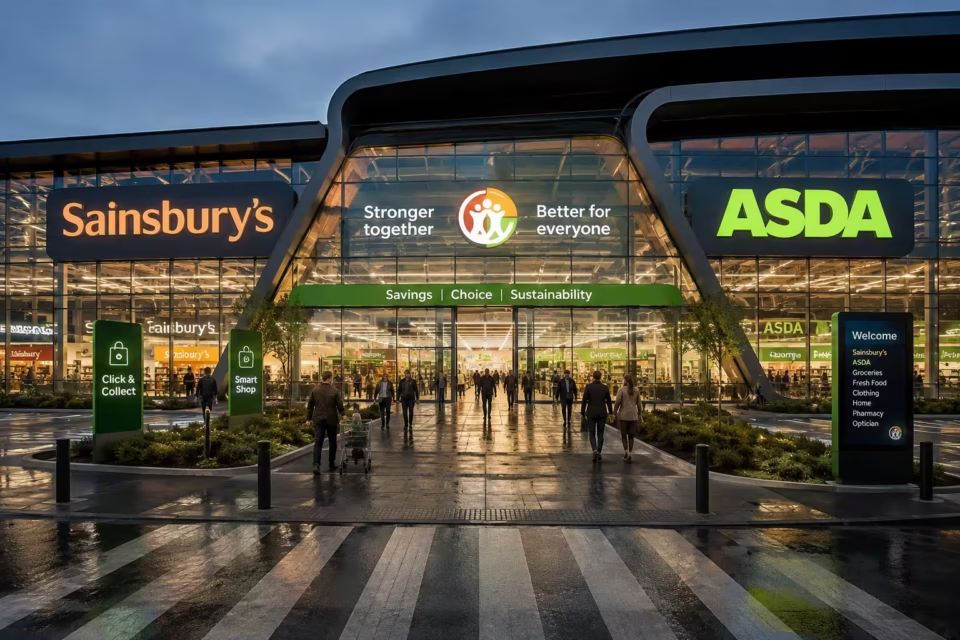
The UK grocery sector is entering a critical phase as pressure mounts on traditional supermarket operators to reassess their competitive structure in response to sustained price competition and the continued expansion of discount retailers.
Industry discussions are increasingly focusing on the possibility of a strategic merger between major UK supermarket groups, including Sainsbury’s and Asda, as part of a broader effort to strengthen buying power, improve supply chain efficiency, and reinforce competitiveness in a market now heavily defined by price sensitivity.
The argument emerging from parts of the industry is that scale has become a decisive factor in modern grocery retail. With consumers increasingly prioritising lower prices over brand loyalty or store location, even marginal differences in basket cost are influencing shopping behaviour. As a result, retailers are under pressure to secure stronger sourcing advantages and reduce operational costs across the supply chain.
Supporters of consolidation believe that a combined structure could enhance procurement strength, improve negotiation leverage with suppliers, and support lower shelf pricing. In an environment where discounters continue to gain market share, this is viewed by some as a necessary response to ensure long-term survival of traditional supermarket models.
It is also argued that consumers today are more mobile than ever, with many willing to travel additional distances or switch retailers entirely for savings as small as 10% on their overall shopping basket. This behavioural shift is reshaping how supermarkets compete, placing greater emphasis on pricing strategy and efficiency rather than geographical convenience.
However, regulatory concerns remain central to the debate. Competition authorities are expected to closely scrutinise any potential merger between large supermarket groups, with questions around market balance, consumer choice, and supplier impact forming key areas of focus.
Critics of consolidation warn that reducing the number of major players could risk limiting competition in the long term, even if short-term pricing benefits are achieved. Others argue that the current market structure is already under pressure from the rapid expansion of discount chains, making structural change increasingly unavoidable.
Despite differing views, the direction of travel is clear: the UK grocery market is becoming more concentrated on cost efficiency, scale advantage, and aggressive pricing strategies. Supermarkets such as Sainsbury’s and Asda are therefore at the centre of a wider industry debate about how traditional retail structures must evolve in order to remain viable in a price-driven market.
The outcome of this discussion could reshape the UK supermarket landscape for years to come, potentially marking one of the most significant structural shifts in modern grocery retail history.