
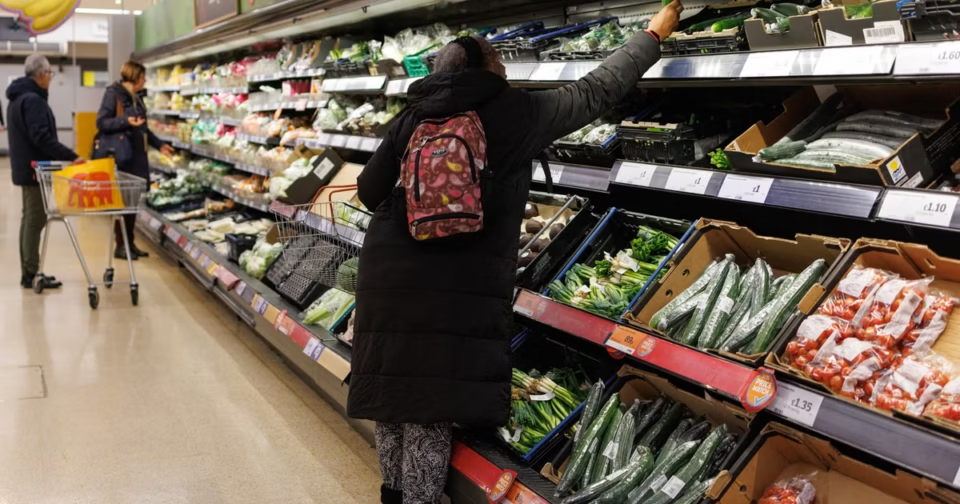
The UK grocery sector is continuing to evolve rapidly as supermarkets adjust to shifting consumer behaviour, stabilising inflation, and intensified competition across both physical stores and online retail channels.
Recent market data shows that grocery inflation has eased to its lowest level in a year, offering some relief to shoppers after a prolonged period of price increases. According to industry figures, inflation has slowed as retailers increase promotions and compete more aggressively on value-led pricing strategies, while consumers remain highly focused on managing household budgets. ()
At the same time, major supermarket groups continue to strengthen their positions through investment in store upgrades, digital platforms, and loyalty programmes. Tesco and Sainsbury’s remain dominant players, while discount retailers such as Lidl and Aldi continue to expand market share by attracting a broader customer base beyond traditional budget shoppers. ()
One of the most significant trends shaping the sector is the continued rise of value-focused shopping behaviour. Consumers are increasingly switching between retailers depending on promotions and pricing, rather than remaining loyal to a single supermarket brand. This shift is forcing retailers to rethink long-term strategies around pricing consistency, availability, and in-store experience.
Online grocery retail also remains a key growth area, with rapid expansion driven by convenience-led shopping habits and improved delivery infrastructure. Meanwhile, physical stores are being redesigned to integrate digital services, faster checkout systems, and more efficient supply chain operations.
Despite easing inflation, analysts warn that cost pressures have not disappeared. Energy, logistics, and global supply chain volatility continue to influence supermarket pricing strategies, meaning retailers must remain highly flexible in order to protect margins while maintaining customer trust.
Overall, the UK supermarket landscape is entering a new phase defined less by price wars alone and more by a combination of value, technology, convenience, and operational efficiency. The sector is expected to remain highly competitive as both traditional supermarkets and discounters continue to compete for long-term market dominance.
The UK grocery sector is continuing to evolve rapidly as supermarkets adjust to shifting consumer behaviour, stabilising inflation, and intensified competition across both physical stores and online retail channels.
Recent market data shows that grocery inflation has eased to its lowest level in a year, offering some relief to shoppers after a prolonged period of price increases. According to industry figures, inflation has slowed as retailers increase promotions and compete more aggressively on value-led pricing strategies, while consumers remain highly focused on managing household budgets. ()
At the same time, major supermarket groups continue to strengthen their positions through investment in store upgrades, digital platforms, and loyalty programmes. Tesco and Sainsbury’s remain dominant players, while discount retailers such as Lidl and Aldi continue to expand market share by attracting a broader customer base beyond traditional budget shoppers. ()
One of the most significant trends shaping the sector is the continued rise of value-focused shopping behaviour. Consumers are increasingly switching between retailers depending on promotions and pricing, rather than remaining loyal to a single supermarket brand. This shift is forcing retailers to rethink long-term strategies around pricing consistency, availability, and in-store experience.
Online grocery retail also remains a key growth area, with rapid expansion driven by convenience-led shopping habits and improved delivery infrastructure. Meanwhile, physical stores are being redesigned to integrate digital services, faster checkout systems, and more efficient supply chain operations.
Despite easing inflation, analysts warn that cost pressures have not disappeared. Energy, logistics, and global supply chain volatility continue to influence supermarket pricing strategies, meaning retailers must remain highly flexible in order to protect margins while maintaining customer trust.
Overall, the UK supermarket landscape is entering a new phase defined less by price wars alone and more by a combination of value, technology, convenience, and operational efficiency. The sector is expected to remain highly competitive as both traditional supermarkets and discounters continue to compete for long-term market dominance.