Fresh Produce Is Becoming Supermarkets’ New Price Battlefield
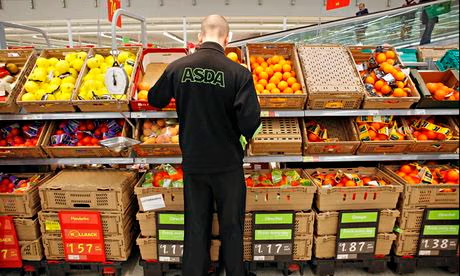
Fruit and vegetables are becoming one of the most important battlegrounds in supermarket pricing — and the next few months could see fresh produce play a much bigger role in how retailers communicate value to shoppers.
For supermarket executives and fresh-produce buyers, the category is no longer simply about securing the right quality at the right price. Fruit and vegetables are becoming a highly visible marketing tool for demonstrating value, particularly at a time when shoppers remain extremely conscious of what their weekly shop is costing.
ISN’s conversations with fresh-produce buyers at Tesco and Sainsbury’s point to a category that is becoming strategically more important. Fresh produce sits at the front of the value conversation because shoppers see prices changing immediately. They may not remember the price of every packaged grocery product, but they notice the cost of bananas, apples, tomatoes, potatoes, berries and other everyday essentials.
That makes fresh produce particularly powerful for supermarket pricing strategy.
The fresh-produce price message
The competition is already becoming visible. Tesco says its fruit and vegetable sales have increased by 10% since 2022, driven by value initiatives including Fresh 5 and Aldi Price Match, alongside improvements in quality and availability. Tesco has also been using Clubcard incentives and personalised offers to encourage customers to buy more fresh fruit and vegetables.
Sainsbury’s is also putting price prominently into its fresh-produce proposition. Its recent Nectar promotions have included substantial discounts on selected organic fruit and vegetables, reinforcing how loyalty pricing is becoming part of the way supermarkets communicate value in the category.
This is significant because the supermarket price war is no longer confined to the traditional basket of milk, bread and household staples. Fresh produce itself is becoming part of the retailer’s price image.
And the timing matters.
The latest UK government fruit and vegetable price data shows how widely prices can vary across individual produce categories and how exposed the sector remains to seasonal and supply conditions. At the same time, poor European harvests have put additional pressure on some vegetable and fruit supplies.
Buyers face a difficult equation
For supermarket buyers, however, lowering the shelf price is not as simple as telling suppliers to reduce costs.
Fresh produce is particularly exposed to weather, harvest conditions, transport, availability, waste and quality. A cheaper product that disappoints shoppers can damage the category just as quickly as a high price.
This is where the next stage of supermarket competition becomes interesting.
Retailers will increasingly need to decide which fruit and vegetables should carry the strongest price message, where promotions should be concentrated and how those prices can influence the customer’s perception of the entire supermarket.
ISN believes this could make fresh produce one of the industry’s most important marketing categories over the coming months.
The winning strategy for retailers will not necessarily be to make everything cheaper. It may be to make the right products visibly good value, while maintaining quality, availability and margins across the wider category.
For supermarket CEOs, commercial directors and fresh-produce buyers, that changes the role of the fruit and vegetable department.
It is no longer simply the place where shoppers buy fresh food.
It is increasingly becoming one of the places where shoppers decide whether a supermarket represents value.