
1. Executive Summary
Industrial refrigeration in Africa is entering a period of structural expansion. The convergence of rapid urbanization, supermarket penetration, rising middle-class consumption, and food system modernization is transforming the continent into one of the most promising growth markets globally for cold chain and refrigeration technologies.
The African cold chain sector—closely tied to industrial refrigeration—was valued at roughly $14–15 billion in the mid-2020s and continues to expand steadily, with strong long-term upside.
At the same time, the broader Middle East & Africa cold chain ecosystem is projected to grow at over 20% CAGR through 2030, reflecting accelerating demand for temperature-controlled logistics.
This growth is not merely cyclical—it is structural. Africa is transitioning from informal food distribution systems to organized retail formats, where refrigeration is no longer optional but essential.
2. Market Overview: Size, Growth, and Structure
2.1 Market Size
- Africa cold chain logistics market:
- ~$14.45 billion (2025)
- ~$18.29 billion (2031 forecast)
- Broader cold chain opportunity (including MEA):
- ~$35.9 billion (2024) with rapid expansion
Industrial refrigeration equipment—core to this ecosystem—is also expanding globally, projected to reach $36.3 billion by 2033, supported by cold chain investments.
2.2 Market Segments
Industrial refrigeration in Africa supports three key sectors:
- Food & Beverage (largest segment)
- Pharmaceuticals & healthcare
- Agriculture exports (horticulture, meat, seafood)
Refrigerated storage alone accounts for over 50% of market share, highlighting infrastructure gaps and demand for warehousing solutions.
3. Core Growth Driver: Rise of Supermarkets and Modern Retail
3.1 Retail Transformation
Africa is undergoing a retail revolution:
- Expansion of supermarkets, hypermarkets, and convenience chains
- Growth of regional retail giants (e.g., Shoprite and others)
- Increasing penetration of formal food retail vs informal markets
Supermarkets depend heavily on:
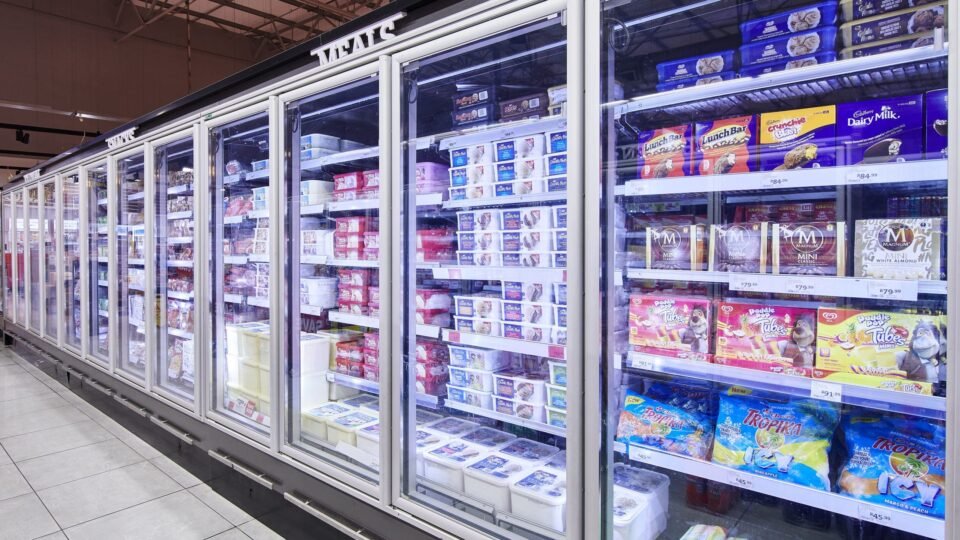
- Refrigerated display systems
- Cold storage warehouses
- Integrated logistics networks
This structural shift is critical. Traditional open-air markets require minimal refrigeration, whereas supermarket chains require end-to-end cold chain infrastructure.
3.2 Changing Consumer Behavior
Urban consumers increasingly demand:
- Fresh produce
- Frozen foods
- Dairy and meat products
- Ready-to-eat and processed foods
As noted by industry stakeholders, consumers are becoming more quality-conscious, particularly in supermarket environments.
4. Urbanization and Demographic Pressure
Africa’s population dynamics are a major catalyst:
- Urban population expected to rise from 45% to 60% by 2050
- Emergence of megacities such as Lagos, Cairo, and Kinshasa
Urbanization drives:
- Centralized food distribution
- Increased demand for refrigerated logistics
- Expansion of retail chains
This directly translates into higher demand for industrial refrigeration systems across the supply chain.
5. The Food Loss Crisis: A Key Market Opportunity
Africa loses up to 40% of perishable food due to inadequate cold chain infrastructure.
This represents:
- A massive inefficiency in the food system
- A major investment opportunity
Industrial refrigeration can:
- Reduce post-harvest losses
- Improve farmer incomes
- Enhance food security
In many ways, refrigeration in Africa is not just a commercial opportunity—it is infrastructure critical to economic development.
6. Key Demand Sectors
6.1 Food & Agriculture
The largest driver:
- Fruits and vegetables (~27% market share)
- Meat and dairy sectors expanding rapidly
- Export-oriented agriculture (e.g., horticulture)
6.2 Supermarket Supply Chains
Modern retail requires:
- Refrigerated distribution centers
- Last-mile cold logistics
- In-store refrigeration systems
6.3 Pharmaceuticals
A fast-growing segment:
- Vaccines
- Insulin
- Biologics
The pandemic accelerated investment in medical cold chains, creating long-term demand for reliable refrigeration systems.
7. Regional Hotspots
7.1 South Africa
- Most advanced cold chain infrastructure
- Strong supermarket penetration
- ~30% market share in some segments
7.2 West Africa (Nigeria, Ghana)
- Fast population growth
- Rapid retail expansion
- Infrastructure gaps = high opportunity
7.3 East Africa (Kenya, Ethiopia, Rwanda)
- Agricultural export hubs
- Increasing investment in cold storage
- Emerging logistics ecosystems
8. Technology Trends in Industrial Refrigeration
8.1 Energy Efficiency and Sustainability
- Shift toward natural refrigerants (CO₂, ammonia)
- Pressure from environmental regulations
- High energy costs driving innovation
8.2 Solar-Powered Refrigeration
- Critical in regions with unreliable electricity
- Enables rural cold storage
8.3 Digitalization
- IoT-enabled monitoring
- Predictive maintenance
- Real-time temperature tracking
These technologies are essential in Africa, where infrastructure variability is high.
9. Challenges and Constraints
9.1 Energy Infrastructure
- High electricity costs
- Frequent outages
- Dependence on diesel backup systems
9.2 Capital Intensity
Industrial refrigeration systems require:
- High upfront investment
- Long payback periods
9.3 Fragmented Markets
- 54 countries with different regulations
- Complex cross-border logistics
9.4 Skills Gap
- Shortage of trained technicians
- Maintenance challenges
10. Competitive Landscape
The market includes:
- Global logistics firms (e.g., DHL, UPS)
- Regional players (e.g., Imperial Logistics)
- Specialized cold chain companies
Competition is shifting toward integrated solutions, combining:
- Storage
- Transport
- Monitoring
11. Future Outlook
11.1 Structural Growth Drivers
- Expansion of supermarket chains
- Rising middle class
- Growth in processed food consumption
- Increased pharmaceutical demand
11.2 Trade Integration
The African Continental Free Trade Area (AfCFTA) is expected to:
- Boost intra-African trade by ~45%
- Increase demand for cross-border refrigerated logistics
11.3 Investment Outlook
The sector is attracting:
- Private equity
- Infrastructure funds
- Development finance institutions
12. Conclusion
Industrial refrigeration in Africa is not just a growing market—it is a foundational enabler of economic transformation.
The rise of supermarket chains is a pivotal catalyst, fundamentally reshaping food distribution systems and creating sustained demand for refrigeration infrastructure. Combined with urbanization, population growth, and evolving consumer preferences, this positions Africa as one of the most compelling frontiers for industrial refrigeration investment globally.
However, success in this market will depend on:
- Adapting to infrastructure constraints
- Leveraging energy-efficient technologies
- Building localized, scalable solutions
In short: Africa’s shift toward modern retail is turning refrigeration from a niche utility into a core pillar of its economic future.