
Kroger is one of the largest supermarket chains in the United States, and its strategy in 2026 reflects a company focused on efficiency, consolidation, and long-term stability. Unlike retailers that compete mainly on extreme low pricing or luxury positioning, Kroger sits in the middle of the US grocery market, trying to balance affordability, quality, and operational strength. In a rapidly changing industry, this middle position requires constant adjustment.
One of Kroger’s main priorities is improving operational efficiency. Grocery retail is a low-margin business, so even small improvements in logistics, sourcing, and inventory management can have a big impact on profitability. Kroger has been investing heavily in automation and supply chain systems, aiming to reduce waste and ensure products reach stores faster and more reliably. These improvements are especially important in a market where supply chain disruptions have become more frequent in recent years.
A key part of Kroger’s strategy is its use of data and analytics. The company collects detailed information from millions of customer transactions through its loyalty programs. This data is used to understand shopping behavior, optimize product placement, and adjust pricing strategies. By analyzing what customers buy and when they buy it, Kroger can make more precise decisions about inventory and promotions. This data-driven approach helps the company remain competitive in a highly competitive grocery environment.
Pricing remains a critical factor for Kroger. While it is not a discount-only retailer, it must still compete with both low-cost chains and premium supermarkets. To manage this, Kroger uses targeted discounts and personalized offers rather than broad price cuts. This allows the company to remain competitive without significantly reducing margins across all products. However, maintaining this balance becomes more difficult during periods of inflation or rising supplier costs.
Another major area of focus is store modernization. Kroger has been updating many of its locations to improve layout, efficiency, and customer experience. This includes better lighting, clearer product organization, and improved checkout systems. The goal is to make shopping faster and more convenient while also encouraging customers to buy more during each visit. Store experience plays an important role in retaining customers, especially in areas where competition is strong.
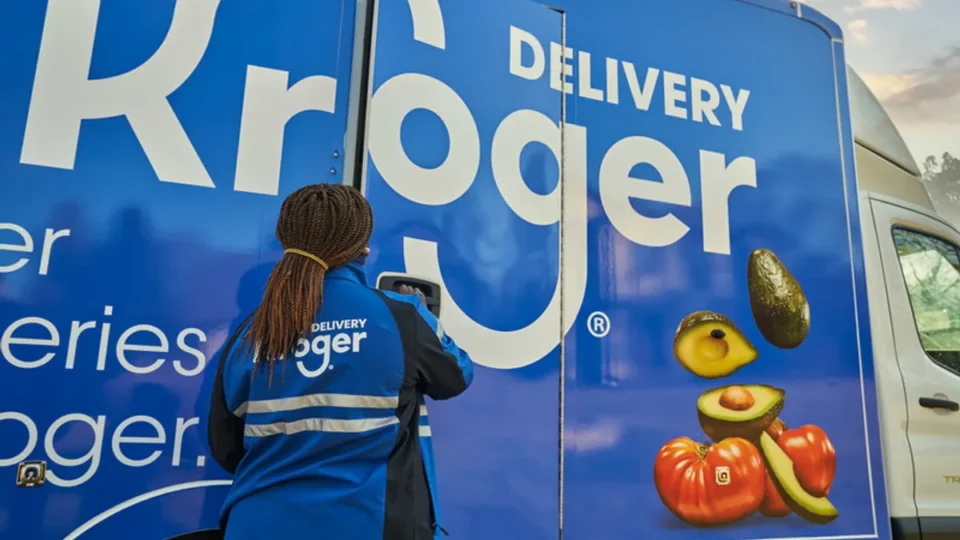
Online grocery shopping has become increasingly important for Kroger. The company has expanded its digital services, including home delivery and pickup options. These services are now essential rather than optional, as more customers expect convenience and flexibility in how they shop. Kroger has been working to integrate its online and physical operations more closely, allowing customers to move seamlessly between the two.
However, online grocery is not without challenges. Delivery costs, logistics complexity, and customer expectations for speed and accuracy all create pressure on margins. Kroger must ensure that its digital services are both efficient and financially sustainable. This has led to investments in warehouse automation and improved fulfillment systems.
Kroger has also been involved in discussions around industry consolidation. The US grocery market is highly competitive, and scale is increasingly important. Larger companies can negotiate better prices with suppliers and invest more in technology and infrastructure. Kroger has pursued strategic partnerships and mergers in the past to strengthen its position, and consolidation remains a key theme in its long-term strategy.
Private-label products are another important part of Kroger’s business. These store-brand items allow the company to offer lower prices while maintaining control over quality and margins. Kroger has been expanding its private-label ranges across different categories, from basic essentials to premium offerings. This helps attract a wider range of customers and improves profitability compared to national brands.
Sustainability is also becoming more important for Kroger. Like other major retailers, the company is working to reduce environmental impact through initiatives such as reducing packaging waste, improving energy efficiency in stores, and lowering carbon emissions in transportation. While these efforts are increasingly expected by consumers, they also require investment and careful planning.
Labor and workforce management are additional challenges. With thousands of employees across the country, Kroger must focus on training, retention, and operational efficiency. The company has introduced technology tools to help employees manage tasks more effectively, but balancing automation with human service remains important in grocery retail.
Despite competitive pressures, Kroger remains a strong player in the US market. Its size, infrastructure, and data capabilities give it significant advantages. However, the grocery industry is evolving quickly, and Kroger must continue to adapt to changing consumer expectations, technological advances, and economic pressures.
Looking ahead, Kroger’s success will depend on its ability to combine efficiency with customer experience. It must continue to streamline operations while also offering value, convenience, and reliability. The company’s focus on data, automation, and store modernization positions it well, but competition will remain intense.
In a sector defined by tight margins and constant change, Kroger’s strategy is one of steady evolution rather than radical transformation. Its future will depend on how well it can refine its operations while staying responsive to the everyday needs of millions of shoppers.
