
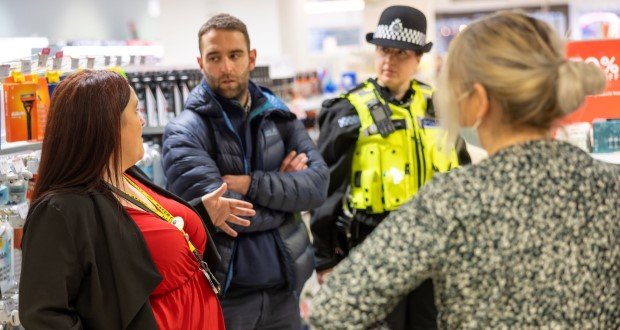
Supermarkets were once among the most ordinary spaces in public life—predictable, neutral, almost invisible in their routine. That quiet normalcy is eroding. The growing call from major chains like Sainsbury’s for increased police presence inside stores signals something deeper than a retail problem. It reflects a shift in how these spaces function in society.
Retailers are now reporting shoplifting at a scale that would have been unthinkable a decade ago: not isolated acts of petty theft, but coordinated, repeated, often brazen. Alongside this comes a rise in verbal and physical abuse toward staff—workers who are neither trained nor paid to manage confrontation. When incidents escalate to the point of armed arrests inside stores like Lidl, it becomes clear that the issue is no longer about shrinkage on a balance sheet. It is about safety, authority, and the boundaries of public space.
What is striking is not just the increase in incidents, but the normalization of responses that would once have seemed excessive. Security guards have become standard. Body cameras are being introduced. Some stores are redesigning layouts to control movement more tightly. And now, the idea of a regular police presence—once reserved for airports, stadiums, or high-risk venues—is entering the supermarket.
This evolution raises uncomfortable questions. When everyday spaces begin to mirror high-security environments, what does that say about the social conditions around them? Retail crime does not emerge in a vacuum. It intersects with cost-of-living pressures, organized criminal networks, and, in some cases, opportunistic behavior amplified by weak deterrence. The supermarket, as one of the few places everyone still physically visits, becomes the frontline where these tensions play out.
There is also a risk in how the response unfolds. A heavier security footprint may deter theft, but it can also reshape the atmosphere of these stores. The implicit contract of trust between retailer and customer—browse freely, pay fairly—gives way to one of suspicion and surveillance. For staff, the burden shifts from service to vigilance. For customers, especially those already feeling economically squeezed, the experience can become subtly adversarial.
None of this suggests that retailers should tolerate rising theft or abuse. They cannot. But framing the solution primarily in terms of enforcement risks missing the broader picture. If supermarkets are becoming security-sensitive environments, it is because they sit at the intersection of multiple systemic pressures: economic strain, gaps in policing capacity, and the professionalization of retail crime.
The real challenge is not just to make stores safer, but to prevent them from becoming symbols of a more fragmented public realm. Because when the weekly grocery run starts to feel like entering a controlled zone, something fundamental has shifted—and not for the better.