

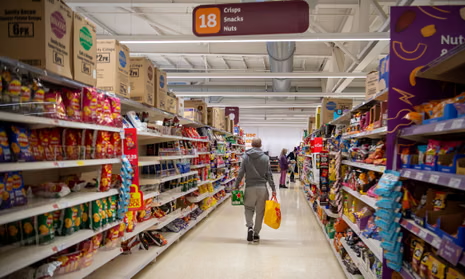

Sainsbury’s has long positioned itself as a supermarket that offers a balance between quality and affordability. Neither as premium as some rivals nor as aggressively priced as discount chains, it has traditionally occupied the middle ground of the UK grocery market. In 2026, however, that middle space has become increasingly difficult to defend. Changing consumer habits and intense price competition are forcing Sainsbury’s to rethink its strategy while staying true to its brand identity.
One of the biggest challenges Sainsbury’s faces is the rise of discount retailers. Chains like Aldi and Lidl have changed how people think about grocery shopping. Low prices are no longer seen as a compromise on quality, and many customers now expect both. This shift has put pressure on Sainsbury’s, which cannot compete purely on price without weakening its margins. Instead, the company has focused on offering targeted promotions and loyalty rewards to maintain its appeal.
A key part of this approach is its Nectar loyalty program. By using customer data, Sainsbury’s can tailor discounts and offers to individual shopping habits. This allows the company to provide value in a more controlled way, rather than reducing prices across the board. In theory, this strategy helps protect profitability while still giving customers a reason to stay loyal. In practice, however, it requires constant refinement, as shoppers become more price-sensitive and willing to switch between stores.
Another important aspect of Sainsbury’s strategy is its emphasis on product quality. The company has invested heavily in its own-brand ranges, which are designed to compete with both premium and budget alternatives. From basic essentials to higher-end selections, these products aim to cover a wide spectrum of customer needs. This flexibility is essential in a market where households are adjusting their spending habits, often buying a mix of low-cost staples and occasional premium items.
Convenience is also playing a growing role in Sainsbury’s operations. Like many supermarkets, it has expanded its network of smaller stores in urban areas. These locations are designed for quick, everyday shopping rather than large weekly trips. This reflects a broader trend in consumer behavior, where people shop more frequently but spend less each time. For Sainsbury’s, this shift requires careful planning, as smaller stores have different logistical and operational needs compared to large supermarkets.
Online shopping continues to be another major focus. Sainsbury’s has invested in delivery services and digital platforms to keep up with changing expectations. Customers now expect grocery shopping to be as easy online as it is in-store, if not easier. Meeting this demand involves significant investment in technology and infrastructure, from warehouse automation to delivery scheduling systems. At the same time, the company must ensure that these services remain financially sustainable.
The company’s past attempt to merge with Asda still influences its current strategy. Although the merger did not go ahead, it highlighted the pressures facing traditional supermarkets. Scale and efficiency have become increasingly important, and Sainsbury’s must find ways to compete without relying on large structural changes. This has led to a greater focus on internal improvements, including cost control and operational efficiency.
Sustainability is another area where Sainsbury’s is working to strengthen its position. Environmental concerns are becoming more important to consumers, and supermarkets are expected to respond. Sainsbury’s has introduced measures to reduce plastic use, cut food waste, and improve energy efficiency in its stores. While these initiatives are positive for its public image, they also add complexity to its operations and require careful management to avoid increasing costs too much.
Supply chain resilience has also become a priority. Global disruptions in recent years have shown how vulnerable food systems can be. Sainsbury’s has been working to build stronger relationships with suppliers and improve its ability to respond to sudden changes. This includes better forecasting and more flexible sourcing strategies. The goal is to ensure consistent availability of products, even in uncertain conditions.
Despite the challenges, Sainsbury’s still has several strengths. Its brand is well established, and it continues to attract customers who value a balance between price and quality. Its broad product range allows it to serve different types of shoppers, from those looking for basic essentials to those seeking something more premium. This versatility is one of its key advantages in a market that is becoming increasingly divided.
Looking ahead, Sainsbury’s faces a delicate balancing act. It must remain competitive on price without losing its identity as a quality-focused retailer. It needs to invest in technology and sustainability while maintaining financial discipline. And it must continue to adapt to changing consumer habits without overextending itself.
In many ways, Sainsbury’s represents the challenges of the modern supermarket industry. It is caught between competing demands: value and quality, convenience and cost, innovation and stability. How well it manages these tensions will determine its future in a market that shows no sign of becoming easier.