
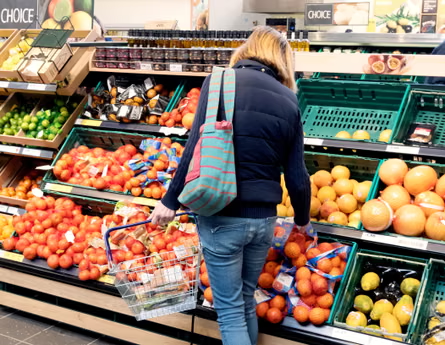
Retailers are currently trapped in a difficult position. On one side, logistics, transport, and energy costs continue to rise, driven by geopolitical tensions and fragile supply chains. On the other, consumers—already under pressure from inflation—are increasingly resistant to further price increases.
For most major supermarket groups, passing these additional costs directly onto shoppers is no longer a viable long-term strategy. Price sensitivity has reached a point where even small increases can shift customer loyalty, particularly toward discount chains or private-label alternatives.
Absorbing the Shock: The Margin Squeeze
As a result, many retailers are choosing—or being forced—to absorb part of the cost increases themselves. This approach protects market share but comes at a clear cost:
- Reduced profit margins
- Lower overall profitability
- Increased pressure on operational efficiency
This margin compression is not limited to one region. From the UK and continental Europe to the United States, supermarkets are facing the same dilemma. Whether it is large multinational chains or regional players, the economic mechanics are identical.
A Prolonged Crisis in the Making
The longer geopolitical tensions persist—particularly those affecting energy markets and key shipping routes—the more entrenched the problem becomes. One critical pressure point is the Strait of Hormuz, a vital artery for global oil supply. Any disruption here directly impacts fuel prices, which in turn raises the cost of transporting goods worldwide.
For supermarkets, this translates into higher costs at every stage of the supply chain:
- Production
- Import/export
- Distribution to stores
Over time, these cumulative pressures become increasingly difficult to absorb.
A Global Retail Challenge
What is emerging is a synchronised challenge across global retail markets. European and American supermarkets alike are facing:
- Persistent cost inflation
- Competitive price wars limiting pricing flexibility
- Greater reliance on efficiency and scale
Discount retailers and private-label strategies may offer partial relief, but they do not eliminate the underlying issue of rising operational costs.
Outlook: Pressure Building Across the Sector
If current conditions continue, the industry is likely to see:
- Continued profit warnings
- Increased cost-cutting measures
- Potential consolidation or restructuring
Ultimately, supermarkets may endure a prolonged period of shrinking margins and constrained profitability, even if sales volumes remain stable.
The challenge is clear: retailers must find ways to maintain competitive pricing while navigating a cost environment that shows little sign of easing. The longer the situation persists, the greater the strain on the entire supermarket ecosystem.