
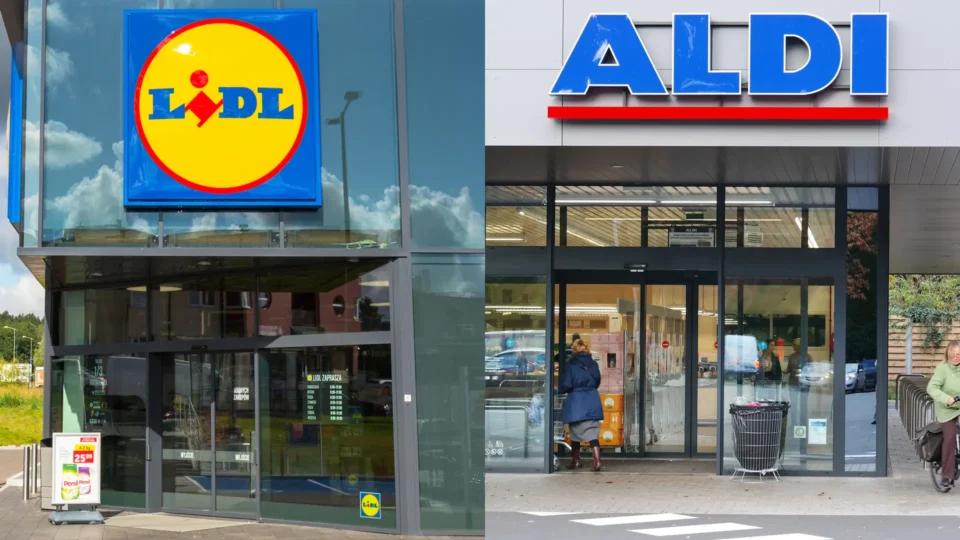
Across Europe, a quiet but decisive shift is underway in how people shop for everyday goods. While traditional supermarkets invest heavily in loyalty programs, digital ecosystems, and personalized offers, a different model continues to gain ground—one built on simplicity, consistency, and price clarity.
Discounters such as Aldi and Lidl have shown that in many cases, shoppers are willing to bypass complex reward systems entirely if the baseline value is strong enough.
The result is a structural change in market dynamics: discounters are steadily taking market share from full-service retailers across Europe.
No Loyalty Needed
Unlike many traditional supermarket chains, discounters typically avoid loyalty cards, points systems, or app-based reward structures. The proposition is straightforward: low prices every day, for every customer.
This simplicity removes friction. There is no need to scan cards, track points, or calculate conditional discounts. The value is immediate and visible at the shelf.
In contrast, full-service retailers often rely on layered pricing strategies:
- loyalty discounts
- targeted promotions
- app-exclusive offers
- personalized coupons
While these systems aim to increase customer retention, they also introduce complexity. And in many cases, the final basket price—especially for larger weekly shops—remains higher.
The Real Battleground: The Shopping Basket
The key comparison is not individual product pricing, but the total cost of a full grocery shop.
For many households, especially in an inflation-sensitive environment, the difference becomes visible only at checkout. A trolley filled with everyday essentials—milk, bread, meat, vegetables, cleaning products—often ends up cheaper in discount formats than in loyalty-driven supermarket chains.
Even when promotional pricing is applied elsewhere, the base pricing structure tends to remain higher, making discounts conditional rather than universal.
Why Shoppers Are Willing to Travel
One of the most revealing behavioral shifts in European retail is the willingness of consumers to travel further for lower prices.
Rather than choosing the nearest supermarket, many shoppers now:
- compare weekly basket costs
- visit multiple stores
- prioritize discounters for bulk shopping
- reserve premium retailers for specific items
This suggests that convenience alone is no longer the dominant factor. Price transparency has become a stronger driver of behavior than proximity.
Loyalty Systems vs. Perceived Value
Traditional retailers have invested heavily in loyalty ecosystems, hoping to build long-term engagement through personalization and rewards. However, these systems often depend on perceived rather than immediate value.
For many consumers, the question is simple:
Does the final basket cost less?
If the answer is consistently “no,” loyalty benefits lose relevance, even if they offer occasional savings.
Discounters bypass this entirely by embedding low pricing into the base model, eliminating the need for behavioral incentives.
A Reflection of Buying Power
This shift is not only about retail strategy—it also reflects broader economic pressure in Europe.
As household budgets tighten, consumers prioritize certainty over optimization. They prefer:
- predictable pricing
- fewer decision layers
- lower overall cost
In this environment, discounters align more closely with purchasing behavior than complex promotional systems.
Market Pressure on Traditional Retailers
As discounters expand, traditional supermarkets face a structural challenge. Competing on loyalty programs alone is increasingly insufficient when competitors offer consistently lower base prices without conditions.
This forces larger retailers into difficult decisions:
- reduce margins
- simplify pricing structures
- rethink loyalty effectiveness
- or risk gradual erosion of volume
The competitive gap is no longer just about branding or store experience—it is about fundamental price architecture.
Simplicity as Strategy
The rise of discount retail in Europe demonstrates a clear principle: simplicity scales.
While loyalty programs and digital ecosystems add layers of engagement, discounters succeed by removing them. They reduce the shopping decision to its most basic form—price versus product.
And in many cases, especially for large weekly baskets, that simplicity wins.
The result is not just a shift in where people shop, but in how retail value itself is defined.