
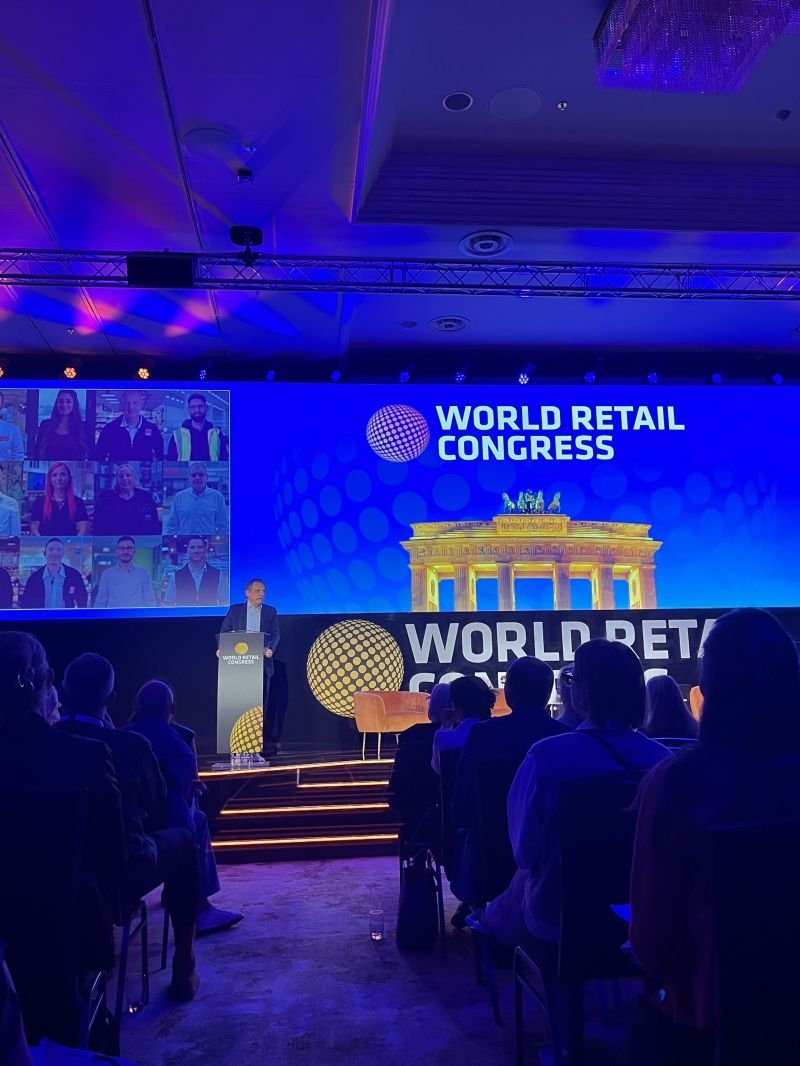
An editorial by Riad Beladi
It is always instructive to listen to speakers outline their visions of the future of retail, particularly in a moment when the sector is undergoing visible and accelerating transformation. Across recent discussions, a wide range of perspectives was presented—some bold, some cautious, and others highly speculative. Yet, among these varying viewpoints, the most compelling arguments were not necessarily the most radical. Instead, they were the most grounded in reality: those that recognize change as an evolution rather than a rupture.
Retail, at its core, remains anchored in fundamental human needs. Food, clothing, and everyday essentials will continue to define the backbone of consumption patterns, regardless of technological progress or shifts in business models. What is changing is not the nature of demand, but the mechanisms through which that demand is met. The question, therefore, is not whether people will continue to shop, but rather where, how, and under what conditions this shopping will take place.
Physical retail is often described in binary terms—either in decline or in revival. Such interpretations, however, fail to capture the more nuanced reality. Stores are not disappearing; they are being redefined. The future of retail space is increasingly tied to experience, convenience, and integration with digital ecosystems. Traditional transactional models are giving way to hybrid environments where physical presence and digital interaction coexist and reinforce one another.
In this emerging landscape, the store is no longer simply a point of sale. It becomes a space of engagement, brand expression, and service personalization. At the same time, digital platforms are no longer separate channels but embedded layers of the overall retail experience. The distinction between online and offline commerce continues to blur, giving rise to a unified ecosystem shaped by data, logistics, and customer expectation.
However, amid this transformation, it is essential to maintain a sense of realism. Technological innovation, while powerful, does not automatically redefine consumer behavior at scale. Habits, cultural patterns, and economic constraints continue to play a decisive role in shaping how retail evolves. For this reason, the most credible visions of the future are those that emphasize adaptation rather than disruption, continuity rather than replacement.
Ultimately, the future of retail will not be defined by the disappearance of physical stores or the dominance of digital platforms, but by their convergence. It will be shaped by a careful balance between efficiency and experience, automation and human interaction, global scale and local relevance.
In this sense, the future is less about reinventing what people buy, and more about reimagining the environments in which they buy it.
