
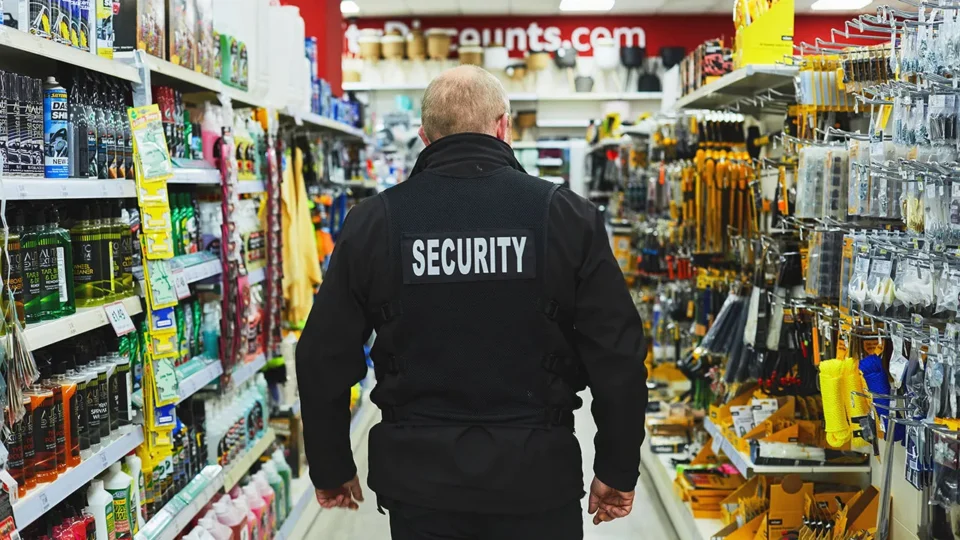
Across modern retail, a quiet policy has become increasingly common. Employees are told not to chase shoplifters. To many customers, and even to some workers, the instruction feels unnatural. A person can walk into a store, fill a bag with goods, and leave while staff members stand back, watch, and call security or police afterward. What appears on the surface to be passivity is in reality a legal and corporate calculation shaped by risk, liability, violence, and the changing nature of retail crime.
For retailers, the issue is no longer simply about stolen merchandise. It is about what could happen if an employee intervenes and somebody gets hurt.
Most countries allow stores some legal authority to detain suspected thieves under limited conditions. In the United States, this is often known as “shopkeeper’s privilege,” a legal principle that allows retailers to stop and question someone reasonably suspected of theft. But the protection is narrow. The suspicion must be justified, the detention must be reasonable, and the force used cannot be excessive. If an employee wrongly accuses a customer, physically injures a suspect, or escalates a confrontation, the retailer may face lawsuits for assault, false imprisonment, discrimination, or even wrongful death.
This legal exposure is one of the main reasons large retailers increasingly adopt strict no-chase policies. From a corporate perspective, the financial risk of a violent confrontation can far exceed the value of stolen goods. A few hundred euros or dollars in merchandise may be covered by insurance or absorbed as inventory loss. A serious injury inside a store can lead to years of litigation, public controversy, insurance claims, and massive financial damages.
The retailer also has a duty toward its workers. Employers are legally responsible for maintaining a reasonably safe workplace. Retail employees are not police officers. Most have little or no training in physical restraint, conflict management, or dealing with armed offenders. Yet modern shoplifting is no longer always minor theft committed by isolated individuals. Organized retail crime has grown more aggressive in many countries, with groups entering stores together, overwhelming staff, and sometimes carrying weapons. In that environment, asking a cashier or stock worker to physically confront a suspect creates enormous danger.
If a worker is stabbed, assaulted, or killed while chasing a thief, investigators and courts may ask whether the company failed in its duty of care. Did management encourage dangerous intervention? Was the employee properly trained? Was the risk foreseeable? These questions are central to why many corporations now instruct workers to disengage completely.
For staff members, the policy creates a difficult emotional and moral conflict. Many employees feel frustrated standing by while theft happens openly in front of them. Some describe a sense of humiliation or helplessness, especially when repeat offenders return regularly knowing workers are unlikely to intervene. Employees may feel that rules designed to protect them also strip them of authority and dignity in the workplace.
At the same time, many workers privately admit they do not want to risk their lives over products owned by a corporation. A minimum wage employee facing an unpredictable suspect must make a split-second decision between personal safety and the instinct to stop wrongdoing. Retailers increasingly decide that no product on a shelf is worth a worker suffering permanent injury or death.
The shoplifter occupies a complicated place in this system. Some theft is driven by organized criminal networks that target high-value goods for resale. Other cases involve poverty, addiction, desperation, or opportunism. Retailers and law enforcement often distinguish between occasional petty theft and organized retail crime, but frontline workers are usually left dealing with both.
Critics argue that visible non-enforcement encourages more theft. When customers repeatedly see shoplifters leaving stores without immediate consequences, confidence in public order can weaken. Some believe these policies send the message that stealing carries little risk. In cities already struggling with retail crime, this perception has fueled political debate about policing, prosecution, and corporate responsibility.
Supporters of no-chase policies respond that the alternative is worse. Physical confrontations inside crowded stores can escalate within seconds. Innocent customers can be injured. Workers can be attacked. Suspects can panic and become violent. Even if a shoplifter is caught, the legal and human consequences of a failed intervention may far outweigh the value of recovered merchandise.
Modern retail has therefore shifted from a philosophy of direct prevention to one of controlled risk management. Stores increasingly rely on surveillance systems, data tracking, security teams, and delayed prosecution rather than immediate physical confrontation. Many retailers now prefer to identify repeat offenders, build evidence over time, and involve police later rather than allow workers to engage directly in dangerous situations.
The result is a retail environment where employees are often instructed to watch rather than act. To the public, it can appear weak or irrational. But behind that decision lies a complex balance between law, liability, morality, employee safety, and the unpredictable reality of modern crime.